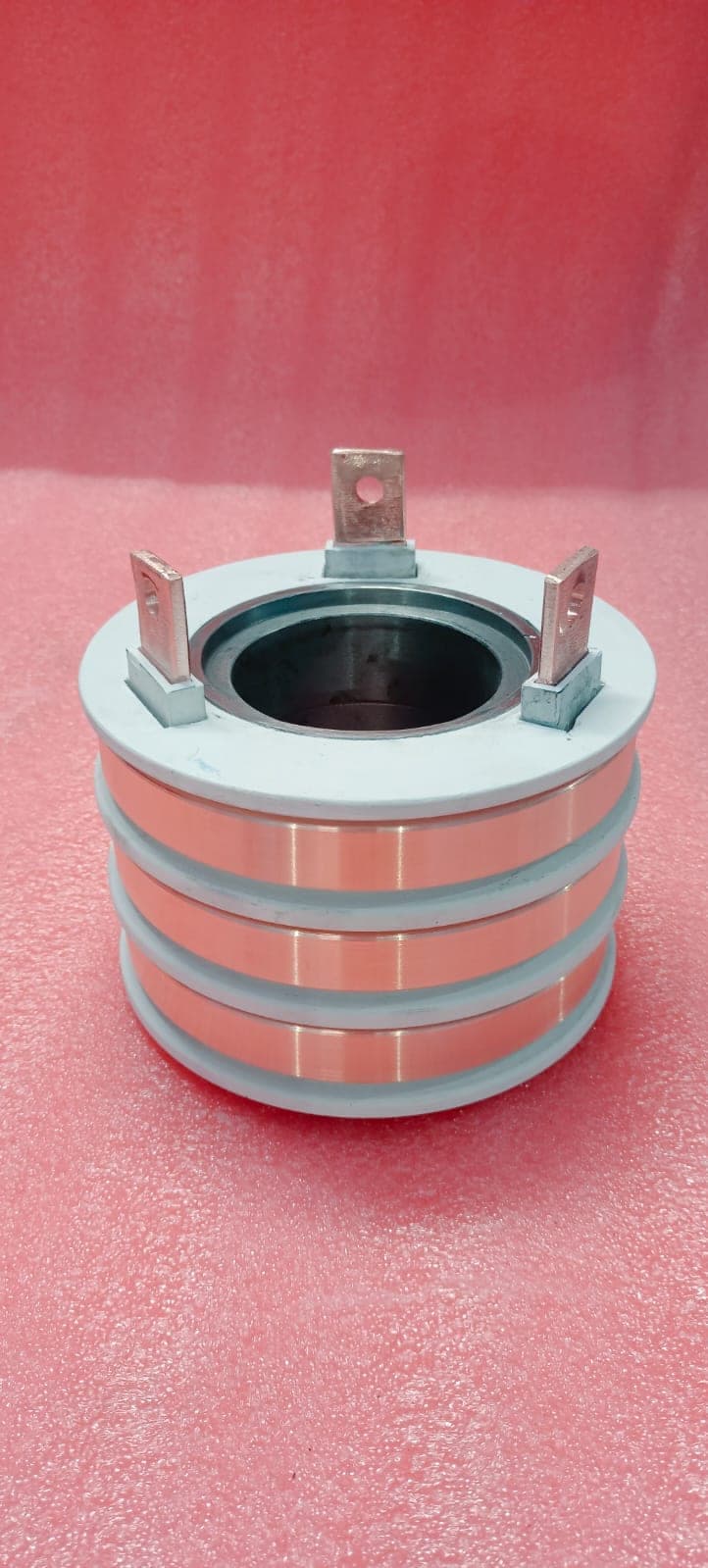
DC Commutators for Motors and Generators
Copper commutators for DC motors and generators
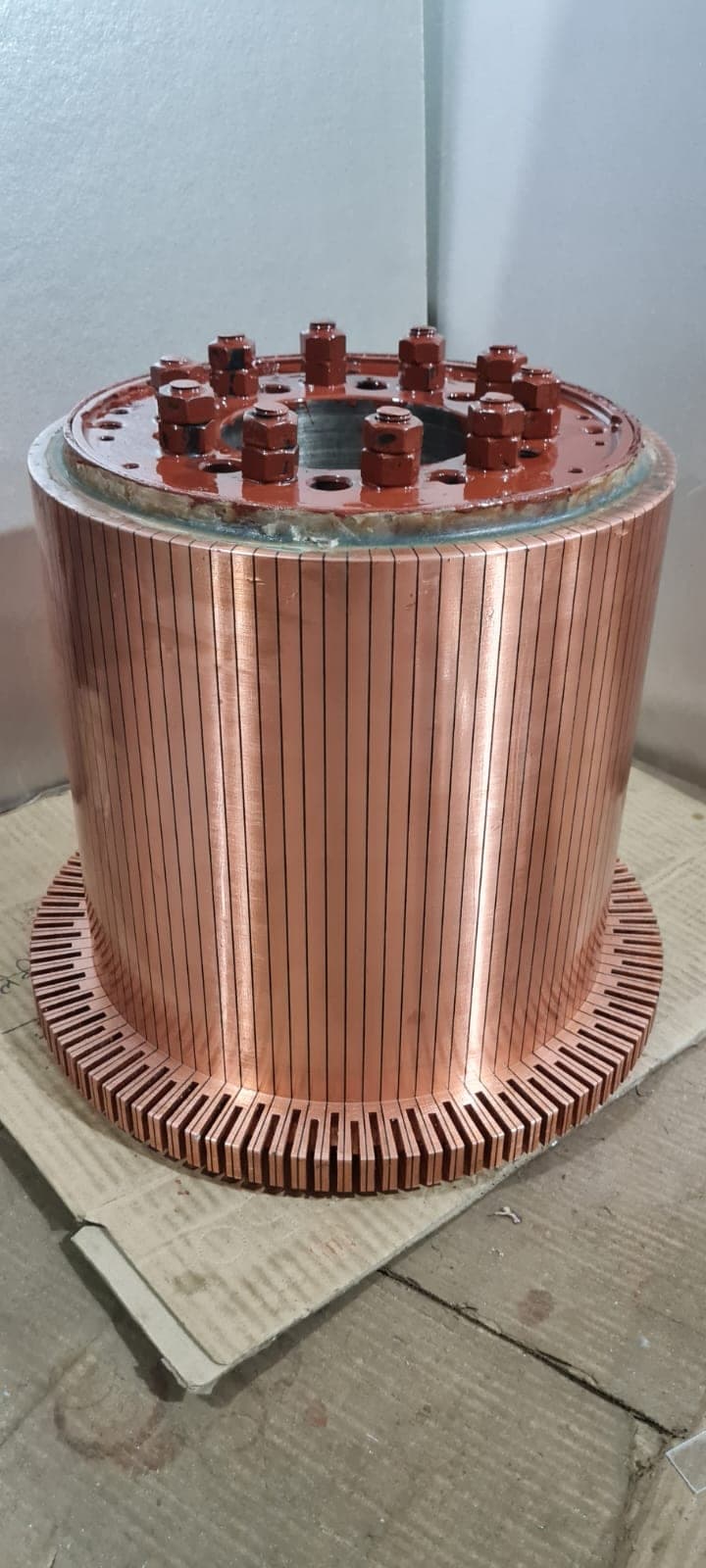
We build commutators piece by piece: hard copper bars are insulated with mica, clamped in steel rings, treated with heat and pressure, then finished on the lathe to a mirror surface. The result is a commutator that runs true from day one — for DC motors, generators and railway machines.
Specifications
| Construction | V-ring clamped copper segments |
|---|---|
| Copper | Hard-drawn silver-bearing electrolytic |
| Insulation | Mica segment & cone insulation |
| Process | Heat-seasoned under pressure |
| Finish | Mirror-turned, concentricity checked |
| Range | Built to sample or drawing, all frame sizes |
| Material | Hard-drawn electrolytic copper segments, mica insulation, steel V-ring construction |
Applications
- DC mill motors
- DC generators
- Traction motors
- Rolling mill drives
- Crane & hoist DC machines
Key Features
- Built piece by piece in our own workshop
- Heat treatment keeps the bars firmly in place
- Mirror-finish running surface
- Balancing available on request
- Exact same size as the original
How we make commutators
Commutator building is the most patient work in the shop. Hard-drawn silver-bearing electrolytic copper segments are cut and separated by mica sheets, then drawn together in a steel V-ring construction with mica cone insulation isolating the copper from the rings. The assembly is heat-seasoned under pressure — cycled hot and re-tightened — so the segments settle and stay tight in service instead of loosening after a few weeks of running. Only then is the running surface mirror-turned and checked for concentricity. Segment count, diameter, length and riser detail are all built to the sample or drawing so your rewinding workshop can fit it to the existing armature. Balancing is available on request.
Production gallery
Commutators — common questions
What is a DC motor commutator?
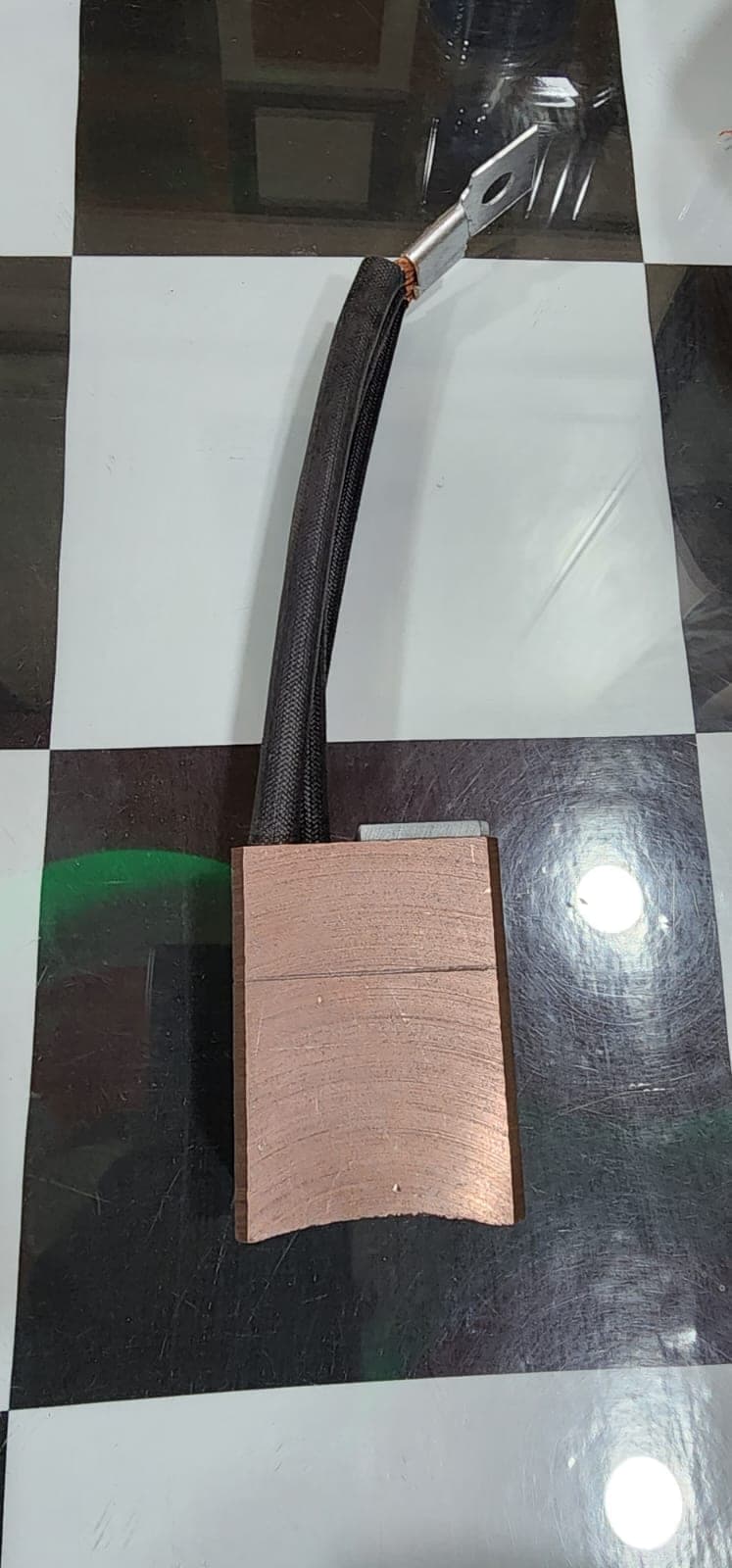
It is the ring of copper segments on a DC armature, each insulated from the next by mica and connected to the armature winding. As the armature turns, carbon brushes slide across the segments and reverse the current direction in each coil at the right moment, which is what keeps a DC motor turning in one direction.
Can a commutator be replaced without replacing the armature?
In most cases yes. The commutator is manufactured to the original dimensions and fitted to the existing armature by your rewinding workshop, which then reconnects the risers. Send the old commutator or a dimensioned drawing to work from.
Why does heat seasoning matter?
Copper and mica settle under heat and pressure. If that settling happens in your machine instead of in our workshop, segments loosen, the surface goes out of round and sparking follows. Seasoning under pressure before final machining is what keeps the assembly tight in service.
What causes sparking at the commutator?
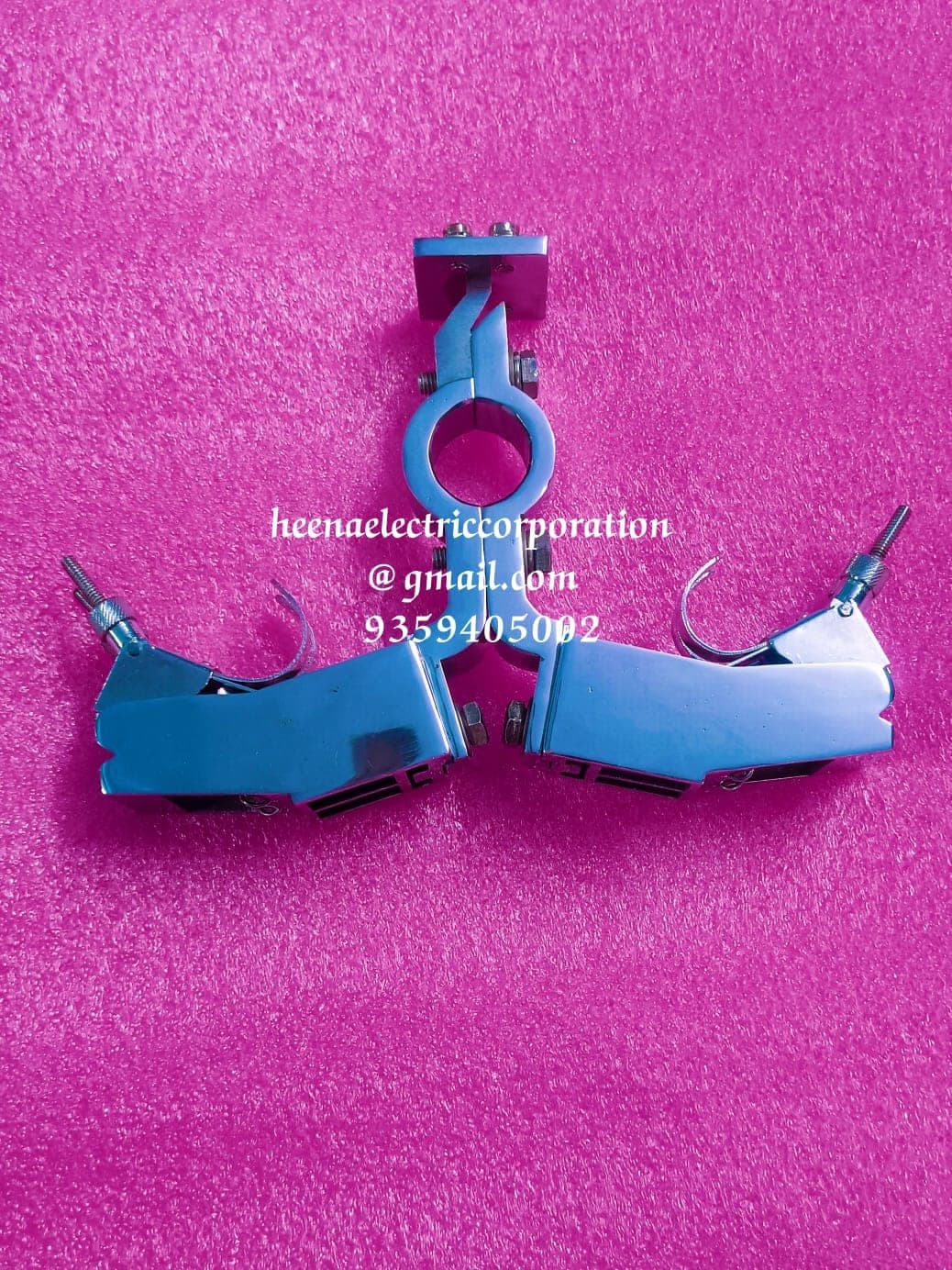
Typical causes are mica insulation standing proud of a worn copper surface, an out-of-round or scored commutator, worn brushes or holders, incorrect brush grade, or loose segments in a commutator that was never properly seasoned. A commutator with enough copper left can often be skimmed and undercut; once the segments are thin or loose, replacement is the reliable answer.