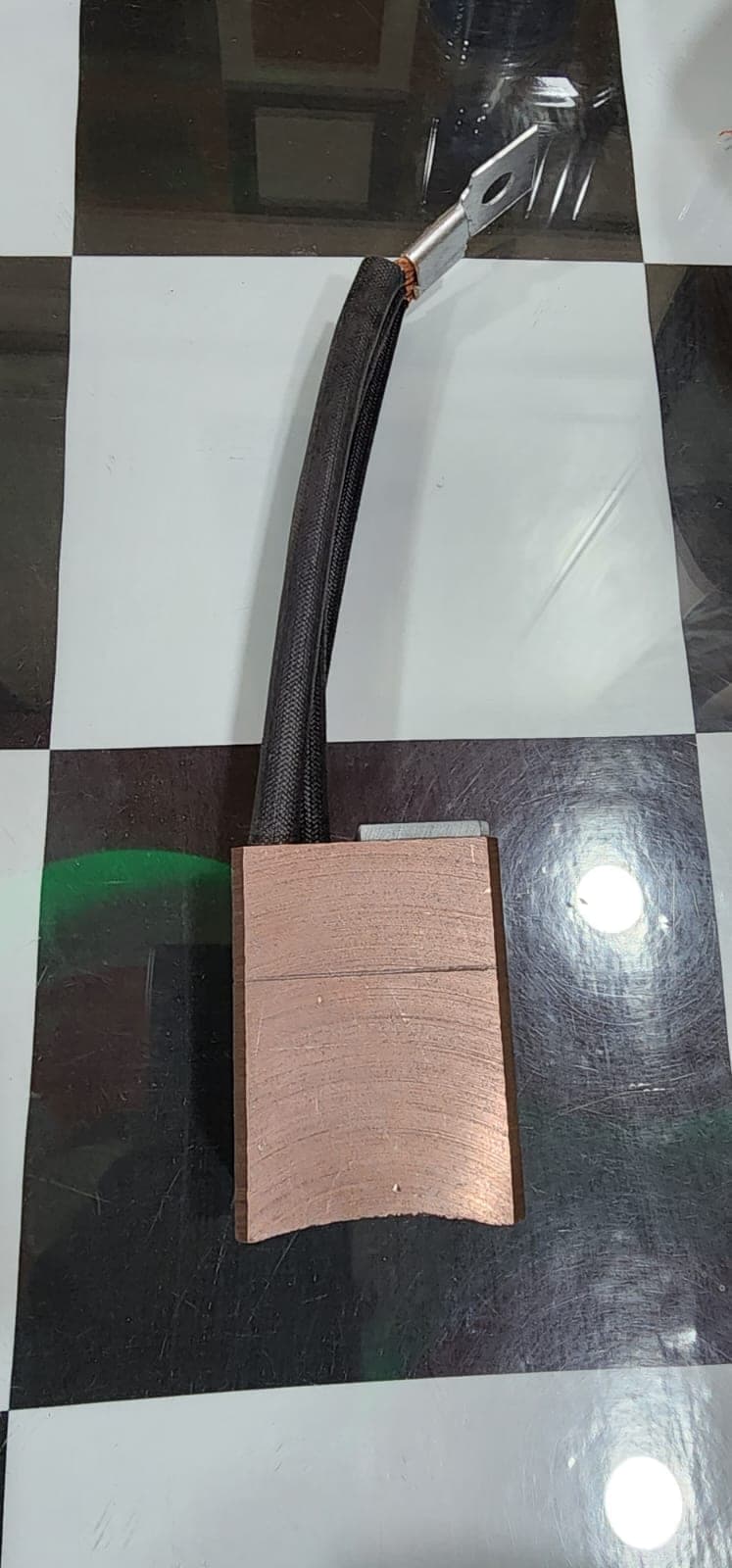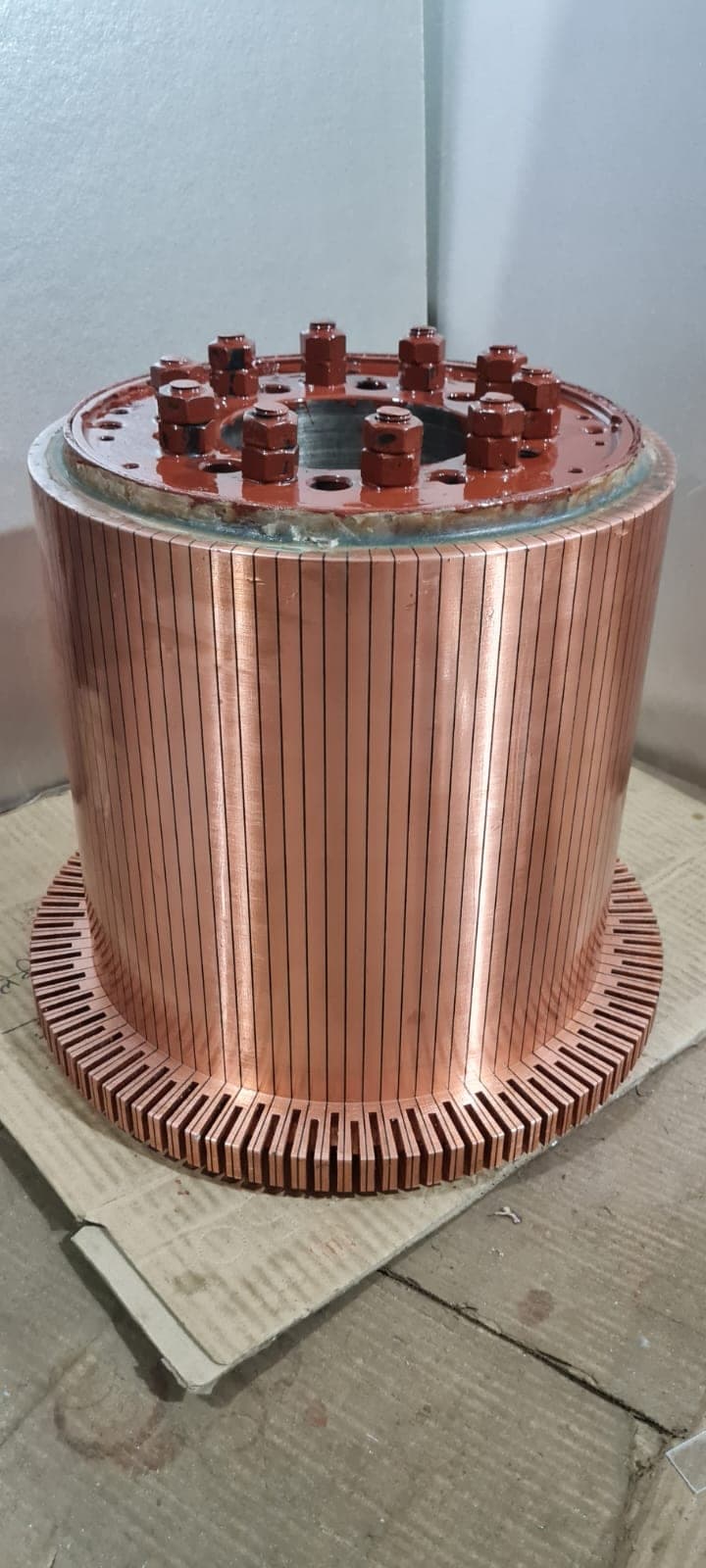
AC Slip Ring Units for Industrial Motors
Machined slip rings for motors up to 5000 HP
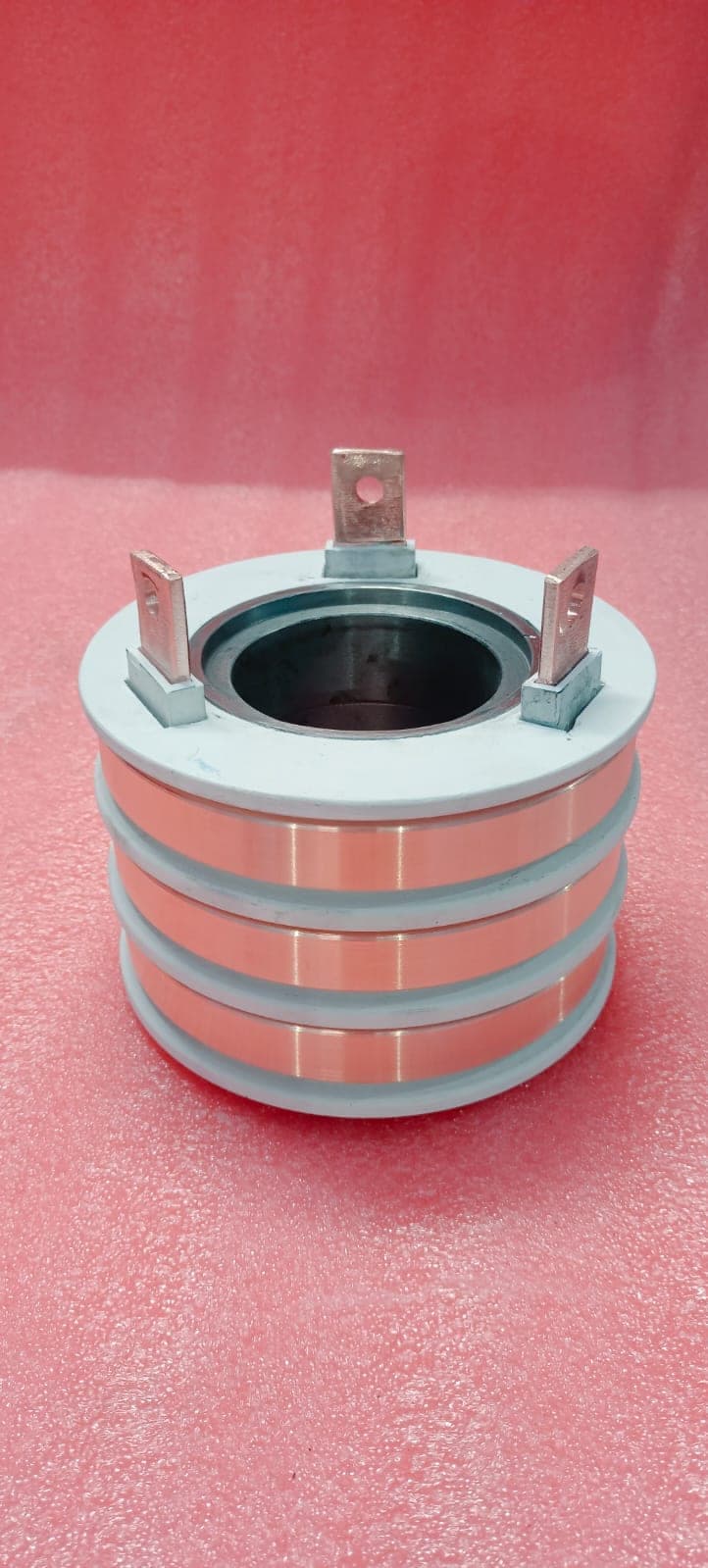
Our slip rings run in heavy industrial motors across India. Every unit is machined in our own workshop: copper or steel rings are fitted on insulated hubs with brass clamps and copper studs, then finished on the lathe so they run perfectly true. From small three-ring units to large stacks for 5000 HP motors, every slip ring matches the original size exactly — guaranteed.
Specifications
| Motor Range | 200 HP – 5000 HP |
|---|---|
| Ring Material | Copper alloy / Phosphor bronze / Steel |
| Insulation | Epoxy glass / Mica-based, Class F & H |
| Configuration | 3-ring to multi-ring stacks |
| Terminals | Brass clamps with copper studs |
| Machining | Finish-turned, concentricity checked |
| Compatibility | 100% interchangeable with OEM units |
| Material | Electrolytic copper, phosphor bronze, EN-series steel, epoxy/mica insulation, brass hardware |
Applications
- Wound rotor induction motors
- HT & LT slip ring motors
- Crane & hoist duty motors
- Mill drive motors
- Generators & alternators
Key Features
- Machined in our own workshop for a perfect fit
- Made from your sample or drawing
- Pure copper rings for the best conductivity
- Class F/H insulation
- High-voltage tested before delivery
How we make slip rings
A slip ring unit starts as a worn sample or a drawing from your side. We measure ring diameters and widths, hub bore, keyway, insulation build and terminal positions, then build the assembly up: rings are turned from electrolytic copper, phosphor bronze or EN-series steel, mounted on an epoxy or mica insulated hub, and connected through brass clamps and copper studs. The finished assembly is turned on the lathe until the ring surfaces run concentric, then high-voltage tested between rings and to the hub before it is packed. Because every unit is made to the sample, it drops into the existing shaft and brush gear without re-machining at your end.
Production gallery
Slip Rings — common questions
What is an AC slip ring and what does it do?
In a wound rotor (slip ring) induction motor, the slip ring assembly is a set of insulated conducting rings mounted on the rotor shaft. Carbon brushes ride on those rings and carry the rotor current out to an external resistance or starter, which is how this type of motor produces high starting torque with controlled current. The rings and brushes are the wearing parts of that circuit.
What motor sizes can you make slip rings for?
We manufacture slip ring units for motors from roughly 200 HP up to 5000 HP, in configurations from small three-ring units to large multi-ring stacks. If your motor falls outside that range, send the details and we will tell you honestly whether we can make it.
Can you make a slip ring without a drawing?
Yes. A worn sample is enough — we take every dimension from the part itself. If the original is damaged beyond measurement, a dimensioned drawing or the motor make, frame size and rating gives us a starting point to work from.
Which ring material should be used?
Electrolytic copper gives the best conductivity and is the common choice, phosphor bronze wears better in abrasive dust, and steel is used where the original design called for it. Unless you ask us to review the selection, we reproduce the material of the unit being replaced.
Are slip rings tested before dispatch?
Yes. After finish turning, ring surfaces are checked for concentricity, and the insulated assembly is high-voltage tested before packing.